About us
Our history
Twenty-five years of neighbours choosing to know one another. What follows is not everything the Council has done — only some of the moments that show what it is for.
2001
A council formed out of compassion
In the year the world changed, neighbours of different faiths across Halton chose to meet rather than retreat. The Interfaith Council of Halton was founded to show solidarity in a time when hatred, discrimination, supremacism and phobias in many forms were hurting communities here and around the world — and to say no to injustice, racism and prejudice of all kinds. It began with two gatherings that Imam Abdul-Qayyum Mufti arranged with The Rev. Dr. Mòrar Murray-Hayes and faith leaders across Halton — Together We Stand and, at Eid soon afterwards, Together We Celebrate — each filled by hundreds of community members alongside police, fire and civic leaders. From them came the idea of a forum that would meet regularly: not simply to meet and greet, but to learn from one another and carry that learning back to congregations, communities and the public. Imam Mufti, Mòrar Murray-Hayes and Rabbi Paul Sidlofsky founded the Council as its three Co-Chairs. Then Mayor Ann Mulvale opened the doors of Town Hall, took the minutes of the first meeting herself, and gave the Council a permanent place there to meet. Imam Mufti and Mòrar Murray-Hayes still sit on the Council today.
Soon after
The first Interfaith Youth Festival
Within months of forming, the Council brought students together for the first Interfaith Youth Festival — ten students from every high school in the Halton Region, Catholic and public boards alike. Michael “Pinball” Clemons of the Toronto Argonauts gave the keynote. After its success the Council stopped selecting students and began taking the festival into the schools with faith leaders — meeting 400 to 500 students in a day, in public and Catholic schools alike. It has run ever since: students move in groups between booths staffed by each faith community, carrying an Interfaith Passport with the same questions for every faith.


2009
Meeting at the Al-Falah Islamic Centre
Through the late 2000s the Council met and spoke in one another’s houses of worship. At the Al-Falah Islamic Centre in Oakville, speakers from several traditions addressed an audience that included Halton Regional Police officers — the same relationship that would shortly be recognised nationally.


December 2009
A constitution is written
Mervyn Russell, Laila Eirksson, Stephen Wise, Donna Martin and Mòrar Murray-Hayes prepared the Council’s constitution, setting out its purpose, its membership and its way of making decisions — by consensus, with care never to lose any faith group over a matter of conscience. It was approved as a final draft for the September 2010 Annual General Meeting.
March 2011
A second Gold Medal for Excellence
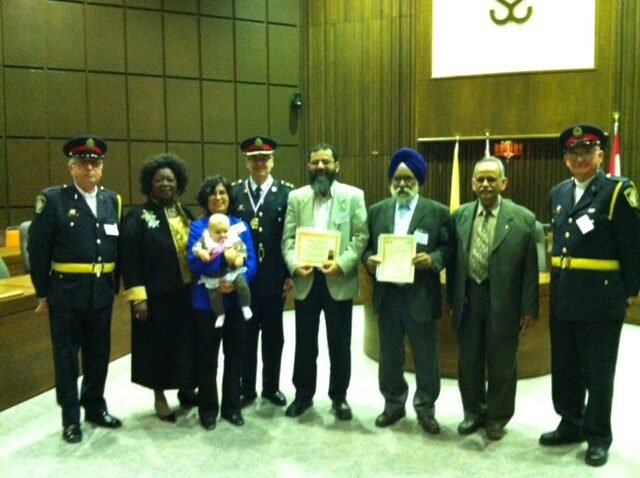
The Human Rights and Race Relations Centre in Toronto had first awarded its Gold Medal for Excellence to the Interfaith Council of Halton, for the Interfaith Youth Festival. On 29 March 2011 it awarded the medal to the Halton Regional Police Service Multi-Faith Support Team, on which the Council is represented — after police studies found that crime had gone down in the areas where the festival was held.
April 2011
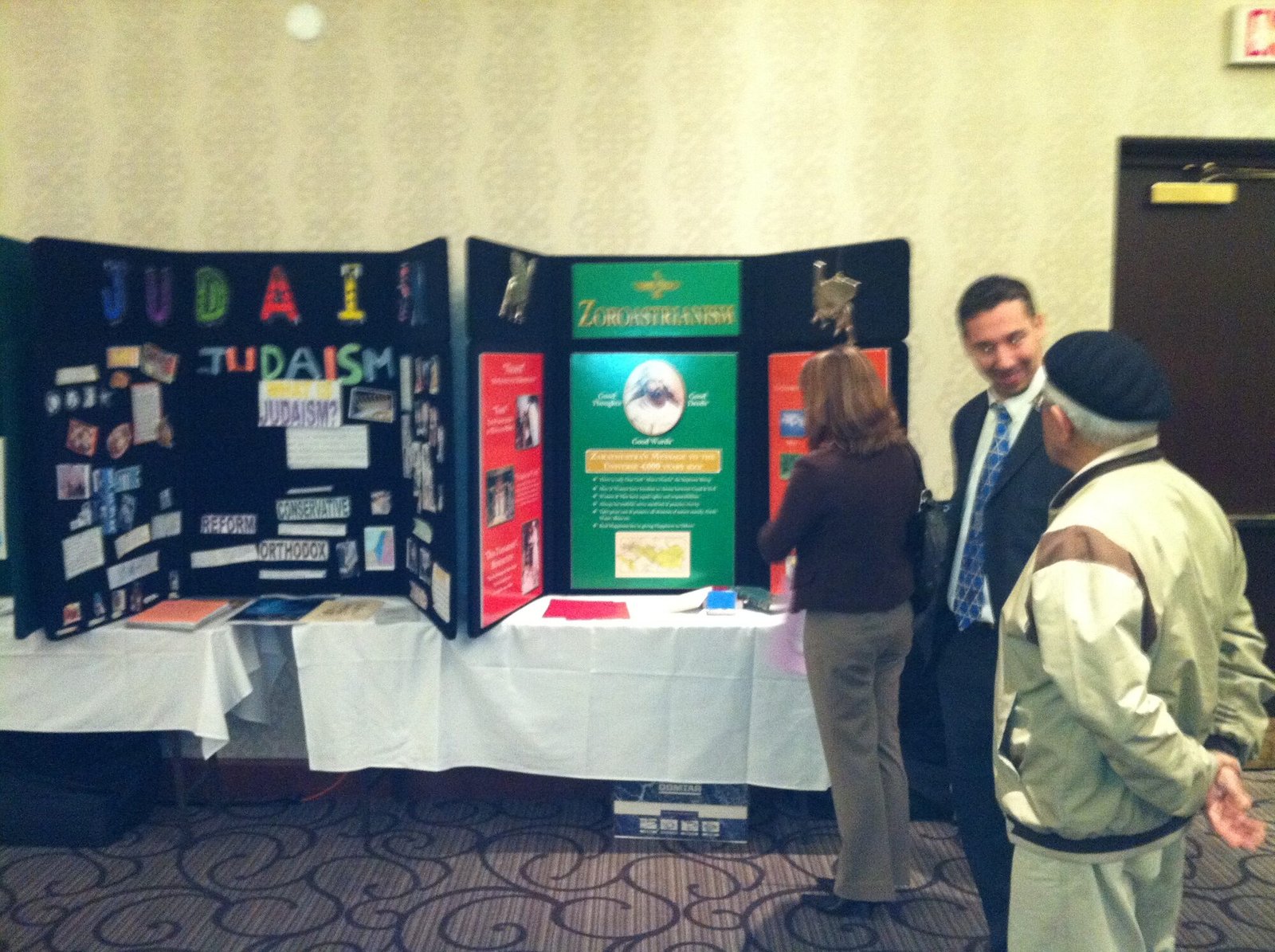
The Interfaith Breakfast
Faith communities set up displays side by side — Judaism, Islam, Protestant and Catholic Christianity among them — and spent a morning explaining themselves to their neighbours. Police officers, clergy, students and families moved between the tables.

December 2015
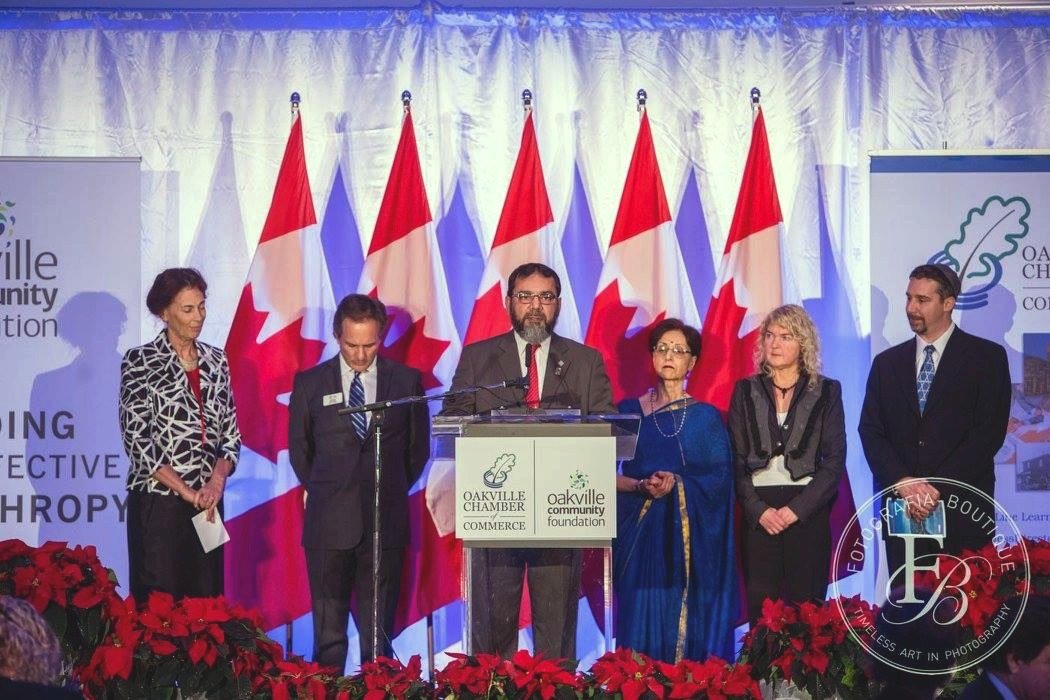
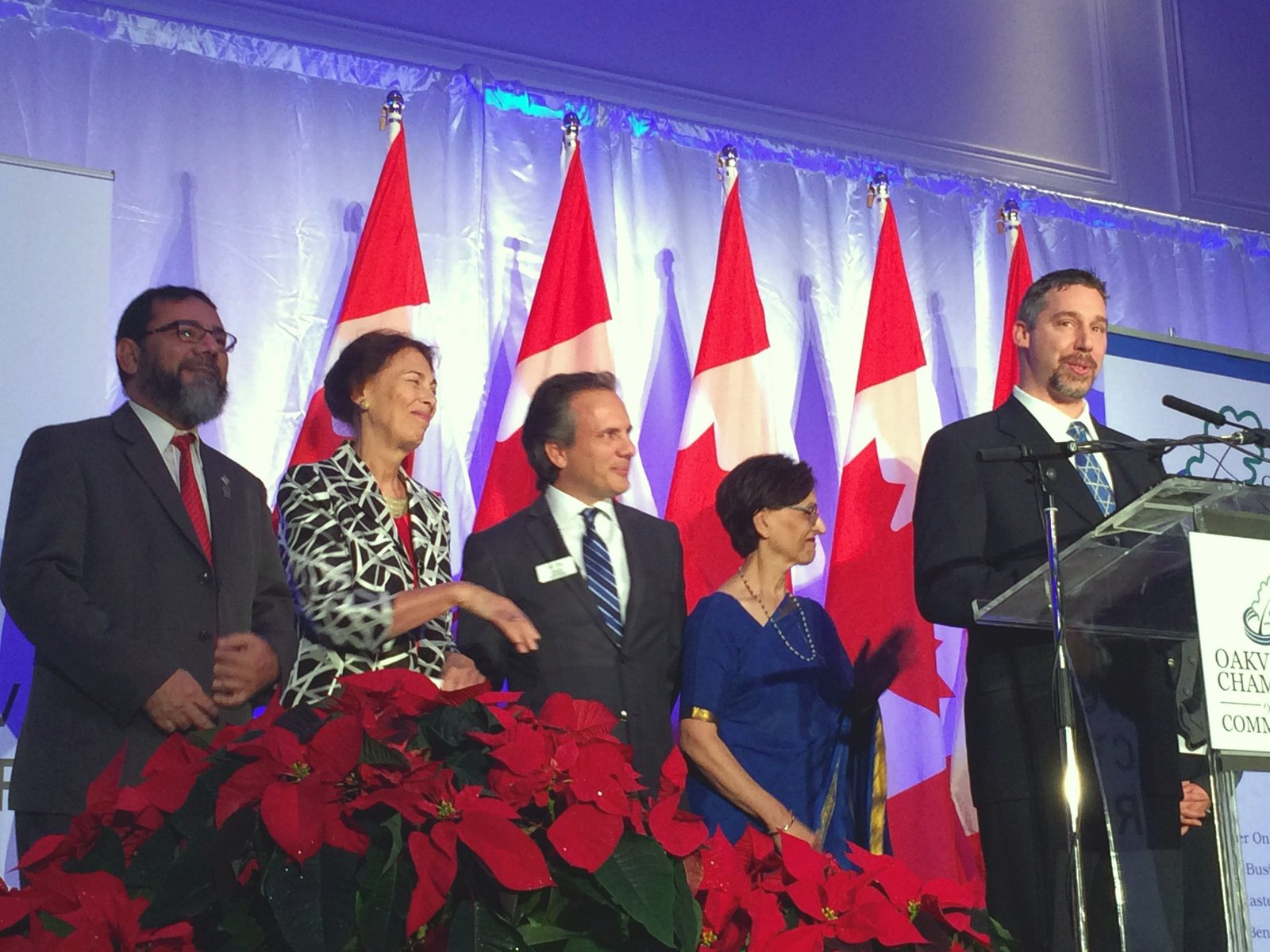
Speaking for our faiths, at the Chamber of Commerce
At a programme hosted by the Oakville Chamber of Commerce with the Oakville Community Foundation, leaders of the Council took the stage together, each speaking for their own faith tradition, before a full ballroom.
February 2017
“We stand with you”
After the Quebec City mosque shooting, an interfaith circle gathered outside the Al-Falah Islamic Centre while Muslims prayed inside. Dignitaries, clergy and neighbours stood in the cold with hand-lettered signs. CHCH News covered the gathering, and the Council spoke on behalf of the faith communities of Halton.


2018
World Religion Day
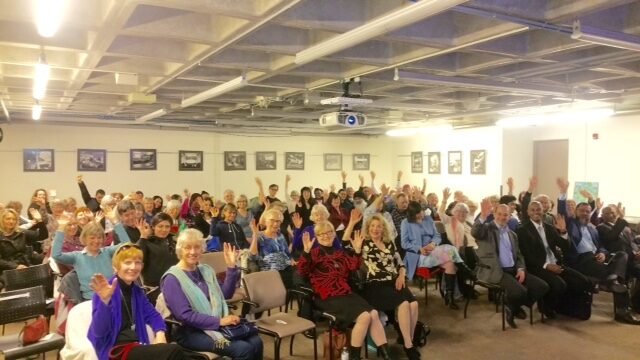
A full hall in Oakville for a day given over to learning about one another’s traditions — one of the Council’s longest-running public events.
February 2019
A film, and a conversation after it
The Council screened Mercy’s Blessing, May Taherzadeh’s short documentary about a teenage boy in rural Malawi who dreams of lifting himself and his sister out of poverty, and is faced with an impossible choice. Screenings work: a film gives a room something to talk about that is not itself.
February 2020
Me, the “Other”
A screening of Shidan Majidi’s documentary, which follows twelve students facing prejudice of very different kinds — over race, immigration status, religion, gender and more. Its argument is the Council’s own: that underneath all of it there is one humanity. A month later, everything closed.
2020–2021
Meeting through the pandemic
When gathering became impossible, the Council moved online and kept going — World Religion Day in February 2021 under the title A World Without Boundaries, Islamic Heritage Month that October, and monthly meetings on screen.

17 March 2022
Prayers for peace in Ukraine
Three weeks after the invasion began, the Council gathered to pray for Ukraine. Faith leaders spoke in turn, as they would again at Town Hall the following year. The photographs are by Anna Sudyk Photography.
December 2022
Hanukkah at the Oakville synagogue
Council members joined the lighting of the menorah at Shaarei Beth-El — the synagogue that has since become the Council’s regular meeting place.

28 October 2023
Prayers for Peace at Town Hall
As war deepened in the Middle East, the Council called a public rally for peace outside Oakville Town Hall. People of every faith in Halton stood together on the forecourt.

November 2025
Into the schools
Council members visited Halton Catholic District School Board classrooms and libraries, so that students could meet a person of a faith rather than read about one.

April 2026
Fasting, and what it teaches
Members gathered to share how their own traditions fast — Ramadan, Lent, Yom Kippur, Ekadashi and others — and what each community learns from going without.

Some of the Council’s earliest work is missing from this page for a simple reason: it happened before anyone carried a camera in their pocket. The first Interfaith Youth Festival and the presentation of the Council’s own Gold Medal both went unphotographed.
Recognition
The Gold Medal for Excellence
“In recognition of their outstanding contribution to the promotion of race relations.”
The Human Rights and Race Relations Centre in Toronto awarded its Gold Medal for Excellence first to the Interfaith Council of Halton, for the Interfaith Youth Festival — and then, on 29 March 2011, to the Halton Regional Police Service Multi-Faith Support Team.
The team had been formed in 2008 with eight members drawn from the Christian, Islamic, Sikh, Bahá’í, Hindu, Jewish and Catholic faiths. Its members attended police stations, parades and events, went on ride-alongs with officers, and made themselves available twenty-four hours a day, seven days a week. The Interfaith Council of Halton is represented on that team.
Before-and-after surveys of students at the festival had shown their understanding of other faiths improving by over 85%. Police studies then found that crime had gone down in the areas where the festival was held.
Still going
The work continues
The Council still meets, still listens, and still turns up when a community in Halton is grieving or afraid. Everyone is welcome.